

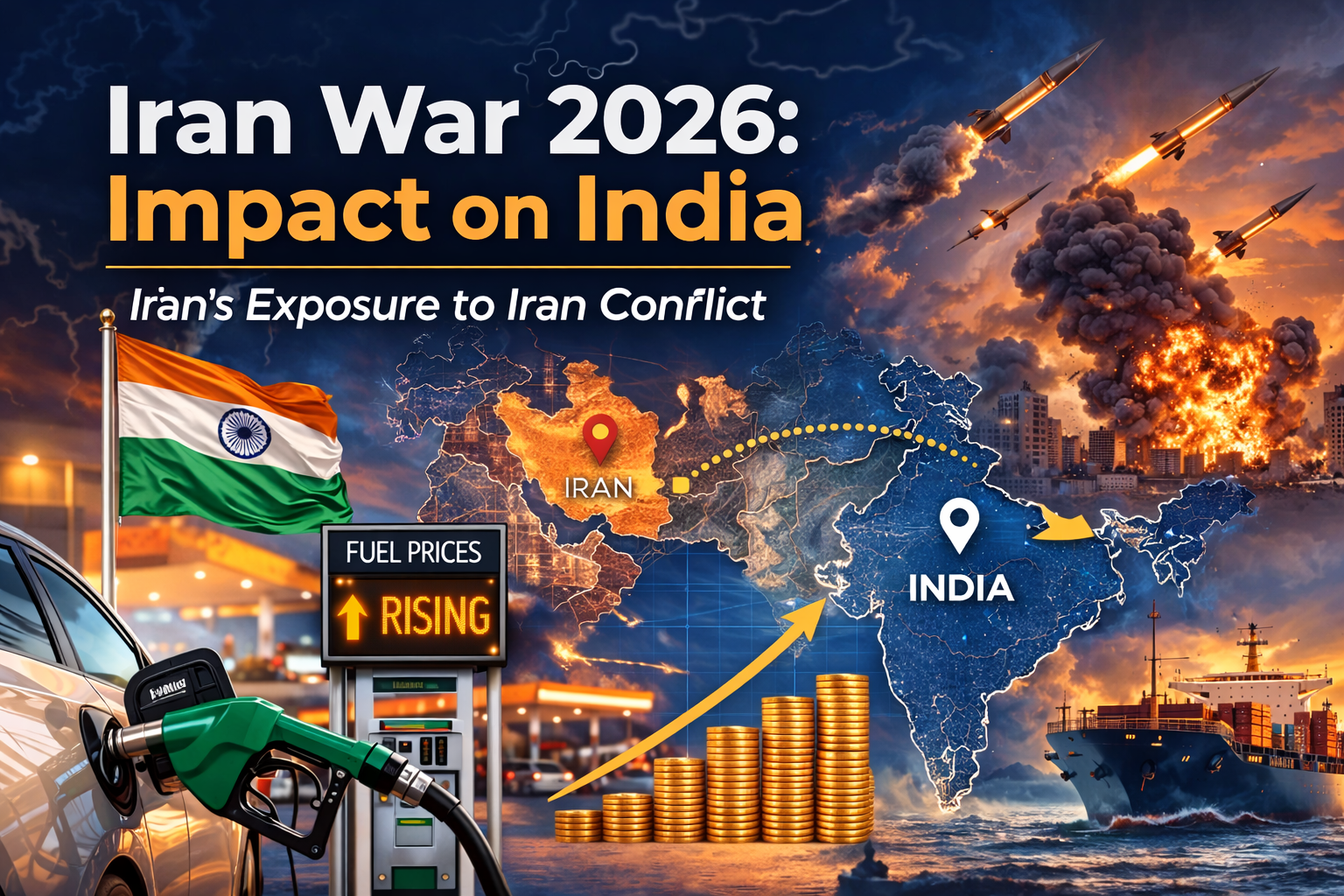
The Iran War 2026 impact on India is being felt far beyond the battlefield. Although India is not directly involved, the conflict has influenced daily life through rising prices, market instability, and economic uncertainty. The war began on 28 February 2026 amid tensions over Iran’s nuclear program and regional influence. By early March, military strikes by the United States and Israel triggered retaliatory actions from Iran, disrupting global oil routes and intensifying geopolitical risks.
Table of contents
Iran War 2026 Impact on India’s Economy
The Iran War 2026 impact on India is most visible in the country’s economic indicators. As a major oil importer, India is highly sensitive to disruptions in global energy supply.
Rising Fuel Prices and Inflation
Crude oil prices have surged due to supply concerns, especially around key shipping routes like the Strait of Hormuz. As a result:
- Petrol and diesel prices have increased
- Transportation costs have risen across sectors
- Inflation has affected essential goods and services
According to energy analysts, higher fuel costs often ripple through the economy, making everyday expenses more burdensome for households.
Pressure on Imports and the Rupee
India relies heavily on Middle Eastern oil imports. With the ongoing conflict:
- Import bills have increased significantly
- The Indian rupee has faced downward pressure
- Trade imbalances have widened
This combination puts stress on fiscal planning and external reserves, making economic management more complex.
Disruptions in Trade Routes
Global shipping lanes have become less predictable due to security concerns. This has led to:
- Delays in imports and exports
- Increased shipping and insurance costs
- Reduced efficiency in supply chains
These disruptions affect industries ranging from manufacturing to retail, slowing overall economic momentum.
Stock Market Volatility
Global uncertainty has triggered fluctuations in financial markets. Investors tend to shift toward safer assets during geopolitical tensions, which has caused:
- Short-term volatility in Indian stock indices
- Reduced investor confidence
- Capital outflows in certain sectors
Market experts note that such instability may persist as long as geopolitical tensions remain unresolved.
Concerns for Indian Workers in the Gulf
India has a large workforce in Gulf countries. The conflict raises concerns about:
- Job security for Indian expatriates
- Potential disruptions in remittances
- Safety and evacuation preparedness
Remittances from the Gulf are a key source of income for many Indian families, making this a critical issue.
Broader Global Context
The Iran War 2026 reflects deeper geopolitical tensions involving security concerns, regional power struggles, and stalled diplomatic efforts. Institutions like the International Energy Agency (IEA) have highlighted how even localized conflicts can disrupt global energy markets, affecting countries far removed from the battlefield.
What This Means for India
India’s experience shows how interconnected the global economy has become. Even without direct involvement in the conflict, the country faces:
- Higher living costs
- Economic uncertainty
- Strategic challenges in energy security
Key Takeaways
- Fuel price increases are driving inflation
- Trade disruptions are affecting supply chains
- The rupee and stock markets remain under pressure
- Indian workers abroad face uncertainty
- Long-term solutions require energy diversification and strong diplomacy
In a connected world, distant conflicts can have immediate domestic consequences. India’s response will depend on economic resilience, policy adaptability, and efforts to secure stable energy sources.
FAQs
The Iran War 2026 impact on India includes rising fuel prices, increased inflation, trade disruptions, and stock market volatility. As a major oil importer, India is particularly affected by global supply uncertainties, which influence both economic stability and everyday living costs.
Fuel prices are rising because the conflict has disrupted oil supply routes, especially near the Strait of Hormuz. This has increased global crude oil prices, which directly affects India’s import costs and leads to higher fuel prices domestically.
The war affects the Indian economy by increasing the import bill, weakening the rupee, and causing inflation. It also disrupts trade and creates uncertainty in financial markets, making economic growth more challenging in the short term.
Yes, the Indian stock market has experienced volatility due to global uncertainty. Investors often move funds to safer assets during geopolitical tensions, leading to fluctuations in stock indices and reduced market confidence.
Indian workers in the Gulf may face risks related to job security and safety. The conflict could disrupt economic activity in the region, potentially affecting employment and remittances sent back to India.