


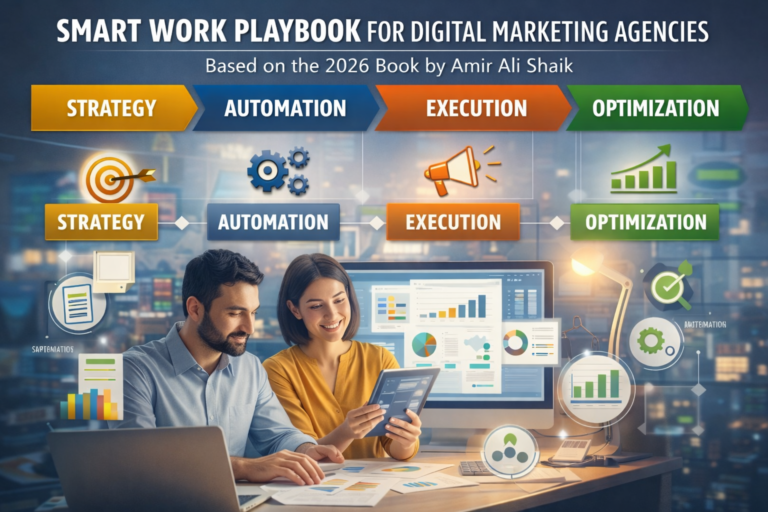
The smart work playbook for digital marketing agencies is gaining attention as agencies worldwide reassess how they operate in an increasingly competitive environment. With rising client expectations, tighter margins, and rapid platform changes, agencies are moving away from effort-based models toward structured, outcome-focused systems. The framework is detailed in an upcoming 2026 book authored by Amir Ali Shaik, which outlines practical methods for building efficient, scalable digital marketing operations.
The Shift Toward Smart Work in Digital Marketing
Digital marketing agencies traditionally relied on long working hours, manual reporting, and expanding teams to scale operations. However, market conditions now demand efficiency, clarity, and measurable outcomes.
Smart work emphasizes:
- Strategic planning before execution
- Repeatable and documented workflows
- Intelligent use of automation
- Performance evaluation based on outcomes rather than effort
This shift reflects broader changes in how service-based businesses measure productivity and growth.
Smart Work Playbook for Digital Marketing Agencies: Core Concepts
Strategy-Led Agency Operations
At the center of the smart work playbook is a strategy-first approach. Agencies are encouraged to define objectives, target audiences, and success metrics before selecting platforms or tactics.
Key strategic components include:
- Clear alignment with client business goals
- Channel selection based on data and relevance
- Defined short-term and long-term performance indicators
This approach reduces inefficiencies and improves consistency across campaigns.
Systemized Workflows and Automation
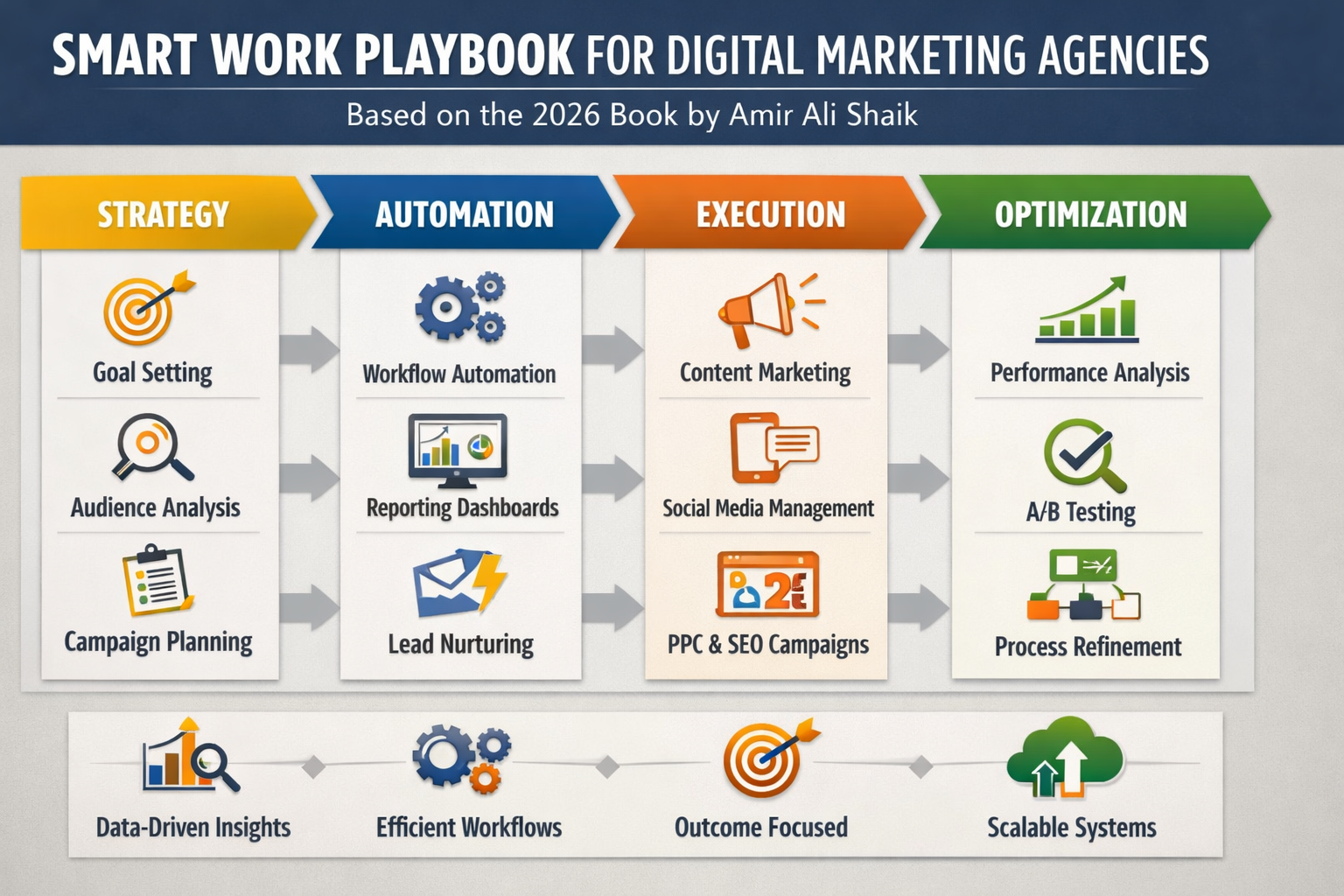
Automation plays a central role in the smart work model. Rather than replacing human decision-making, automation supports execution by handling repetitive tasks.
Common applications include:
- Campaign performance reporting
- Social media publishing schedules
- Email and lead nurturing workflows
- Data collection and dashboard creation
Systemized workflows help agencies maintain quality while reducing turnaround times.
Data-Driven Decision Making
The smart work playbook highlights the importance of continuous measurement and analysis. Decisions are guided by real-time data rather than assumptions or intuition alone.
Agencies typically monitor:
- Conversion and engagement rates
- Customer acquisition costs
- Funnel performance metrics
- Return on marketing investment
Regular data reviews enable timely optimizations and better resource allocation.
Team Structure and Operational Efficiency
Defined Roles and Accountability
Efficient agency operations rely on role clarity. The playbook emphasizes assigning specific responsibilities rather than overlapping tasks across teams.
Examples of specialized roles include:
- Strategy and planning leads
- Performance marketing analysts
- Content and creative specialists
- Analytics and automation managers
Clear accountability improves execution speed and reduces internal friction.
Documentation and Knowledge Systems
Internal documentation is presented as a critical component of smart work. Playbooks, standard operating procedures, and templates ensure consistency and reduce dependency on individual team members.
Documented systems support:
- Faster onboarding
- Predictable service delivery
- Scalable operations
Client Communication and Performance Reporting
Transparent communication is a recurring theme in the smart work playbook. Agencies are encouraged to focus reporting on outcomes rather than surface-level metrics.
Effective communication practices include:
- Structured reporting schedules
- Context-driven performance insights
- Clearly defined deliverables and timelines
This approach strengthens trust and aligns expectations between agencies and clients.
Measuring Success in a Smart Work Model
Outcome-Focused Evaluation
The smart work framework moves away from measuring hours worked. Instead, success is assessed using business-relevant indicators.
Common performance indicators include:
- Achievement of client objectives
- Retention and contract continuity
- Revenue efficiency per project
- Operational cost optimization
These metrics provide a clearer view of long-term agency sustainability.
What This Means
The smart work playbook for digital marketing agencies represents a practical response to evolving industry demands. By emphasizing systems, data, and strategic clarity, the framework offers agencies a pathway to scale responsibly while maintaining performance standards. As outlined in Amir Ali Shaik’s forthcoming 2026 book, the model reflects a broader shift toward efficiency-led professional services.
FAQs
The smart work playbook for digital marketing agencies is a structured operational framework that focuses on efficiency, automation, and data-driven execution. It helps agencies improve outcomes by standardizing workflows, clarifying roles, and aligning marketing activities with measurable business goals.
The framework is detailed in an upcoming book authored by Amir Ali Shaik, scheduled for publication in 2026. The book outlines practical strategies for improving operational efficiency and scalability within digital marketing agencies.
Smart work helps agencies manage increasing competition and rising client expectations. By focusing on systems, data, and automation, agencies can deliver consistent results, reduce operational strain, and scale without significantly increasing resources.
Automation supports the smart work model by handling repetitive tasks such as reporting, scheduling, and data collection. This allows agency teams to focus on strategic planning, creative development, and performance optimization.
Yes, the framework is applicable to agencies of all sizes. Smaller agencies can particularly benefit by optimizing resources, improving efficiency, and competing effectively without expanding teams or increasing overhead costs.