


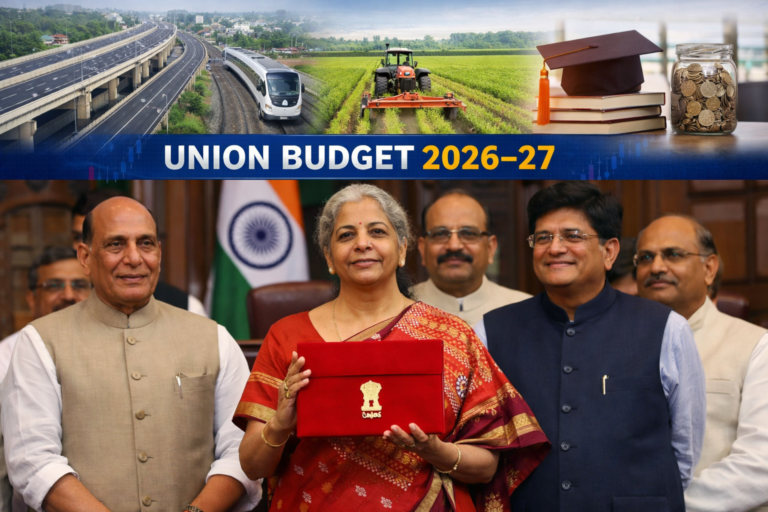
The Union Budget 2026–27 Highlights reveal a strong push toward infrastructure expansion, tax simplification, and long-term economic stability. Presented on 1 February 2026 by Finance Minister Nirmala Sitharaman, the budget focuses on balancing national development with social welfare. The government emphasized capital expenditure, education support, agriculture modernization, and easier compliance for businesses. As a result, the plan aims to strengthen India’s global competitiveness while addressing everyday economic concerns of citizens.
Table of contents
Union Budget 2026–27 Highlights: Infrastructure and CapEx Push
One of the most significant announcements was the increase in capital expenditure (CapEx). Higher government spending is directed toward:
- National highways and expressways
- Railway modernization projects
- Port and logistics upgrades
- Urban infrastructure and smart city development
This strategy is expected to generate employment, enhance connectivity, and encourage private investment. Infrastructure growth often creates multiplier effects across industries such as construction, transport, and manufacturing.
Tax Simplification and Compliance Reforms
The budget did not revise income-tax slabs, which means most taxpayers will not face additional burdens. Instead, the focus shifted toward clarity and efficiency. Key measures include:
- Simplified tax return filing procedures
- Extended correction deadlines
- Increased use of automated and digital systems
- Reduced paperwork and manual verification
These steps aim to improve voluntary compliance while saving time for individuals and small enterprises. Consequently, taxpayers benefit from reduced errors and fewer penalties.
Financial Market and Business Reforms
To encourage entrepreneurship and investment, several regulatory and compliance changes were introduced. The government prioritized smoother business operations by:
- Rationalizing customs duties
- Simplifying stock market rules
- Reducing procedural delays
- Improving financial transaction transparency
Such reforms can improve investor confidence and attract both domestic and foreign capital, supporting sustainable economic expansion.
Education, Skills, and Student Benefits
The Union Budget placed clear emphasis on human capital development. Funding increased for:
- Digital learning resources and school infrastructure
- Scholarships and higher-education assistance
- Internship programs and industry training
- Skill-development initiatives linked to employment
By aligning education with market needs, the policy seeks to prepare students for evolving job markets and emerging industries.
Agriculture and Rural Economy Modernization
Agriculture received targeted support through modernization and technology integration. Major focus areas include:
- Digital farming tools and precision agriculture
- High-value crop cultivation
- Livestock and allied rural enterprises
- Improved irrigation, storage, and transportation networks
These measures aim to stabilize farmer incomes while generating rural employment. Strengthening the agricultural supply chain also improves food security and export potential.
Key Takeaways
- Strong increase in infrastructure and capital expenditure
- Tax system simplified without raising slabs
- Easier compliance for businesses and investors
- Greater funding for education and skills training
- Modernization of agriculture and rural sectors
- Long-term fiscal stability with balanced welfare measures
FAQs Section
The main Union Budget 2026–27 highlights include increased infrastructure spending, tax simplification, financial market reforms, enhanced education funding, and modernization of agriculture. The overall goal is economic growth combined with social welfare and fiscal discipline, ensuring both development and stability for citizens and businesses.
No, the Union Budget 2026–27 did not change income tax slabs. Instead, the government focused on simplifying tax filing processes, extending correction deadlines, and increasing automation. These steps are designed to reduce compliance errors and improve convenience for individual taxpayers and small businesses.
Students benefit through increased funding for education infrastructure, digital learning tools, scholarships, internships, and skill-development programs. The budget aims to align academic training with employment opportunities, helping young people gain practical experience and industry-relevant skills before entering the workforce.
The budget promotes agricultural modernization by supporting digital farming tools, high-value crops, better irrigation systems, and rural infrastructure. These initiatives aim to improve productivity, stabilize farmer income, and strengthen rural economies through diversified agricultural and allied activities.
Capital expenditure is crucial because it funds large-scale infrastructure projects such as roads, railways, ports, and urban development. Increased spending in these areas creates jobs, boosts economic activity, and improves logistics efficiency, which in turn attracts private investment and supports long-term national growth.