


Table of contents
What is GEO and why is it becoming an important topic in digital publishing? GEO, short for Generative Engine Optimization, refers to optimizing content for AI-driven search engines that generate answers instead of simply listing links. As generative AI tools reshape how users discover information, publishers and journalists are adapting their content strategies to stay visible and credible.
What Is GEO and How Does It Work?
Defining Generative Engine Optimization
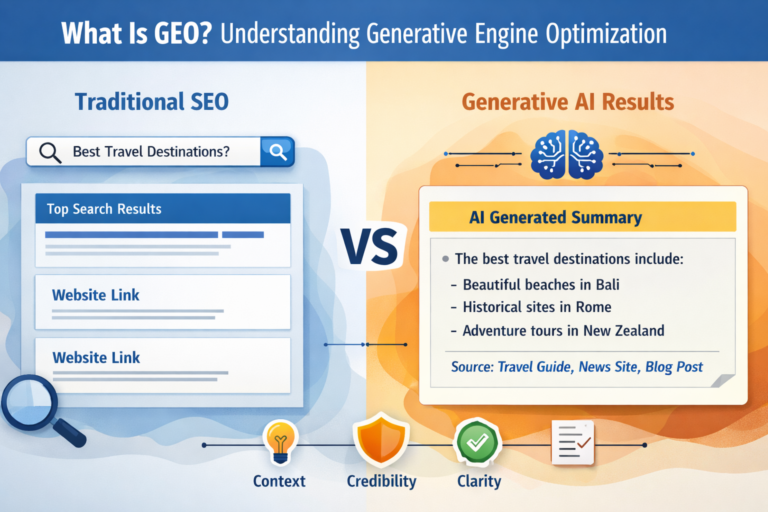
GEO focuses on making content easily understandable, quotable, and trustworthy for AI systems that generate responses. Unlike traditional search engines, generative engines summarize information from multiple sources before presenting it to users.
These systems rely on:
- Context and clarity
- Structured information
- Authoritative and well-sourced content
As a result, content written with clear explanations and factual accuracy is more likely to be referenced.
GEO vs SEO: What Is the Difference?
How Optimization Is Evolving
While SEO aims to rank web pages in search results, GEO aims to ensure content is used as a source in AI-generated answers.
Key differences include:
- SEO prioritizes rankings and clicks
- GEO prioritizes credibility and clarity
- SEO targets keywords
- GEO targets concepts and intent
Both approaches now work together rather than replacing each other.
Why GEO Matters in the AI Search Era
Changing User Behavior
Users increasingly ask direct questions to AI-powered tools. These platforms often provide instant summaries, reducing the need to visit multiple websites.
For news publishers and content creators, GEO helps:
- Maintain visibility in AI-generated results
- Strengthen authority and trust
- Reach audiences earlier in the discovery process
This shift is especially relevant for explainers, news analysis, and evergreen content.
How Content Is Optimized for GEO
Key Content Signals Generative Engines Prefer
Generative engines favor content that demonstrates expertise and reliability. This includes:
- Clear headlines and subheadings
- Direct answers to common questions
- Logical structure and concise paragraphs
- Consistent tone and factual accuracy
Well-organized articles are easier for AI systems to interpret and reference.
What This Means for Publishers and Readers
GEO encourages higher-quality content across the web. For readers, it improves access to clear and reliable information. For publishers, it reinforces the importance of accuracy, transparency, and depth in reporting.
Rather than chasing trends, GEO rewards content that genuinely informs and explains.
In Summary
Generative Engine Optimization reflects a broader shift in how information is discovered online. By focusing on clarity, authority, and usefulness, GEO supports both human readers and AI-driven platforms. As generative search continues to grow, understanding what is GEO becomes essential for modern digital publishing.
FAQs
GEO, or Generative Engine Optimization, is the practice of optimizing content so AI-powered search engines can understand, summarize, and reference it accurately. It focuses on clarity, structure, and credibility rather than only rankings.
SEO targets higher rankings in search results, while GEO focuses on being used as a trusted source in AI-generated answers. GEO emphasizes context, accuracy, and explanation over keyword placement alone.
News platforms benefit from GEO because AI tools often summarize current events. Well-structured and factual reporting increases the chances of being referenced, helping publishers maintain reach and authority.
No, GEO does not replace SEO. Both work together. SEO helps content rank in search engines, while GEO ensures the same content is understandable and usable by generative AI systems.
Journalists, publishers, bloggers, and content creators should care about GEO. Anyone producing informational content can benefit by making their work clearer, more structured, and more authoritative.