
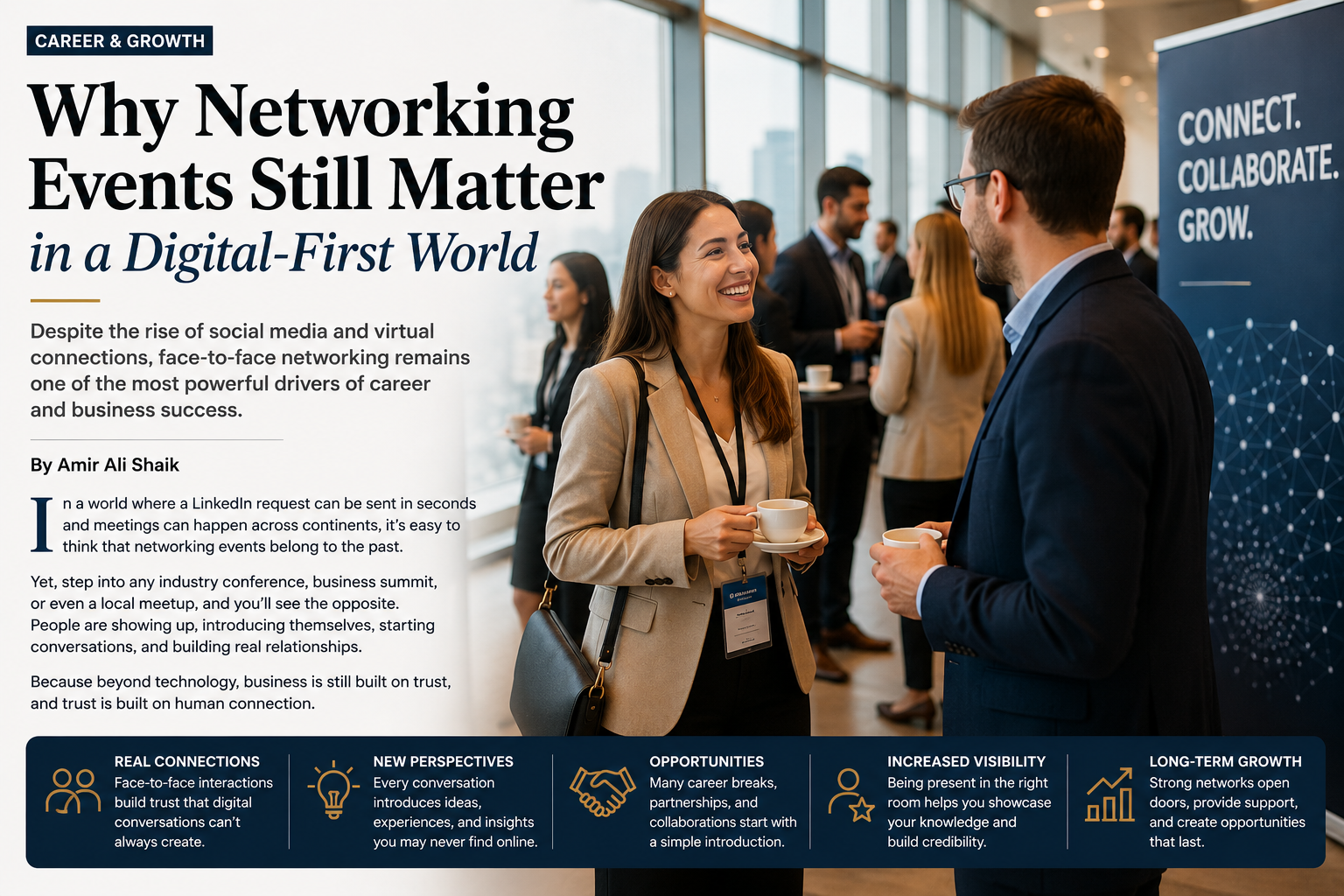
In a world where business conversations increasingly happen through screens, it would be easy to assume that networking events have lost their relevance. Social media platforms allow professionals to connect instantly, virtual meetings eliminate geographical barriers, and digital communication has become faster than ever before.
Yet conference halls continue to fill. Industry summits attract thousands of attendees. Business networking events remain a staple in cities around the world. Despite the technological advances that have transformed how people communicate, face-to-face networking continues to play a significant role in professional and business development.
The reason is simple: people still do business with people.
Technology has made communication more efficient, but efficiency is not always the same as connection. A LinkedIn request can introduce two professionals, but it rarely builds the same level of trust as a genuine conversation. An email can communicate information, but it often lacks the context and authenticity that emerge during an in-person discussion.
Networking events create opportunities for interactions that are difficult to replicate online.
One of the most valuable aspects of attending professional events is exposure to new perspectives. A single event can bring together entrepreneurs, executives, investors, marketers, students, and industry specialists from diverse backgrounds. Conversations that begin casually often lead to unexpected insights, partnerships, or opportunities.
Many professionals can identify a pivotal moment in their careers that originated from a chance meeting. Sometimes it is a conversation during a coffee break. Sometimes it is an introduction made by a mutual connection. In other cases, it is simply being present in the right environment at the right time.
These opportunities are difficult to predict, which is precisely what makes them valuable.
Networking events also provide something increasingly rare in modern communication: undivided attention. In digital environments, conversations compete with notifications, emails, messages, and endless distractions. During in-person interactions, people are often more engaged, more attentive, and more willing to explore ideas in greater depth.
This environment encourages stronger professional relationships.
Another reason networking events remain important is visibility. Regardless of industry, professional growth often depends on more than technical expertise alone. Visibility helps individuals share ideas, demonstrate knowledge, and establish credibility within their field.
Attending events allows professionals to become active participants within their industries rather than passive observers. Whether asking thoughtful questions, contributing to discussions, or simply engaging with peers, individuals have opportunities to make meaningful impressions.
Importantly, effective networking is not about collecting business cards or maximizing the number of introductions made during an event. The most successful networkers tend to focus on building genuine relationships rather than pursuing immediate outcomes.
People often attend networking events with the expectation of finding clients, investors, or career opportunities. While those outcomes certainly occur, the most valuable connections frequently emerge over time. Relationships built on mutual respect and shared interests often prove more sustainable than purely transactional interactions.
The shift toward hybrid work models has made networking events even more relevant in some respects. As more professionals work remotely, opportunities for spontaneous workplace interactions have declined. Networking events help fill that gap by creating spaces where professionals can exchange ideas, share experiences, and build relationships beyond their immediate organizations.
For younger professionals entering the workforce, these events can be particularly valuable. Beyond career opportunities, they provide exposure to industry trends, leadership perspectives, and practical knowledge that may not be available through formal education. Observing experienced professionals interact, communicate, and collaborate can offer lessons that extend far beyond any presentation or keynote session.
At the same time, networking events are evolving. Today’s attendees are often looking for authenticity rather than sales pitches. They value meaningful conversations over scripted introductions. The most impactful events are those that foster dialogue, collaboration, and knowledge-sharing rather than simply facilitating transactions.
As technology continues to reshape the professional landscape, networking will undoubtedly continue to evolve as well. Virtual communities, digital platforms, and artificial intelligence will remain important tools for connecting people across distances.
However, the fundamental human need for trust, collaboration, and personal connection is unlikely to disappear.
Networking events endure because they satisfy that need.
While technology can introduce people, relationships are still built through shared experiences, meaningful conversations, and genuine interactions. In an increasingly digital world, those human connections may be more valuable than ever.
For professionals seeking growth, opportunities, and long-term relationships, networking events remain more than just calendar appointments. They continue to be places where ideas are exchanged, partnerships are formed, and careers are shaped—often one conversation at a time.