

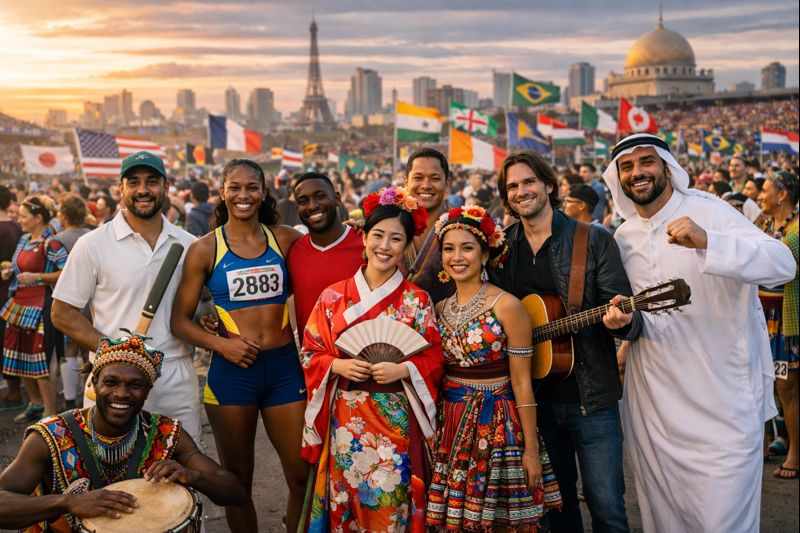
In a world that often feels divided by borders, politics, and competing interests, there is something quietly powerful happening on football fields, cricket grounds, concert stages, film festivals, and even food fairs. This growing sense of sports and culture unity is visible wherever people come together to celebrate talent, tradition, and shared emotion, highlighting the importance of this unity.
At its core, sports and culture unity represents two powerful forces that speak a universal language, often achieving what diplomacy struggles to do by bringing countries closer together through connection rather than conflict.
You do not need to follow international relations closely to notice it. You see it when fans from rival nations sit side by side in a stadium, cheering brilliant play no matter which jersey the athlete wears. You feel it when a song from another country trends globally, or when a film made in one language moves audiences thousands of miles away. These moments may seem small, but together they are reshaping how nations see one another.
This is not just about entertainment. Sports and culture are becoming bridges, human, emotional, and deeply relatable bridges, that connect people across borders in ways policies and speeches often cannot.
When Sports Become a Shared Language
Sports have always had an extraordinary ability to unite. You do not need a translator to understand the joy of a last minute goal, the tension of a tied match, or the heartbreak of a near miss. Across continents, fans react the same way, jumping, shouting, hugging strangers, because the emotions are universal.
International sporting events like the Olympics, FIFA World Cup, Cricket World Cup, Asian Games, and Commonwealth Games are among the few occasions when the entire world pauses to watch the same moments unfold. Athletes compete under national flags, yet the admiration they earn often transcends nationality.
Think about how a sprinter from a small country becomes a global hero, or how a tennis champion earns respect even from fans of rival nations. These athletes do not just represent their countries; they humanize them. Suddenly, a nation is not just a headline. It is a person with a story, a struggle, and a dream.
Sports also create informal diplomacy. Matches between countries with strained political relations often open rare windows of connection. A handshake at the net, a shared laugh during a rain delay, or teams standing together after a tragedy can send messages of respect and solidarity that resonate far beyond the scoreboard.
Cultural Exchange Beyond Borders
While sports unite through competition, culture connects through expression. Music, movies, art, fashion, literature, and food travel faster than ever, crossing borders with a tap on a screen.
A teenager in India listens to Korean pop. A family in Europe watches an Indian or African film on a streaming platform. A chef in South America experiments with Middle Eastern flavors. These are not just trends. They are cultural conversations.
Cultural exchange helps break stereotypes. When people engage with another country’s stories, humor, traditions, and values, abstract ideas turn into real human experiences. A culture that once felt foreign becomes familiar, even relatable.
International cultural festivals, art exhibitions, book fairs, and heritage exchanges encourage people to experience differences not as threats, but as opportunities to learn. Governments increasingly recognize this soft power, supporting cultural diplomacy programs, student exchanges, and creative collaborations to strengthen international relationships.
Athletes and Artists as Global Ambassadors
Today’s athletes and artists often carry more influence than official envoys. With millions of followers on social media, they shape global perceptions in real time.
When a famous athlete speaks about equality, peace, or unity, their message reaches fans across borders instantly. When artists collaborate across countries, blending languages, sounds, and styles, they create something that belongs to everyone.
These collaborations matter. They show that creativity thrives when borders become meeting points instead of barriers. A song recorded across three continents or a sports league featuring players from dozens of countries sends a simple but powerful message: cooperation works.
Importantly, these figures also challenge extreme nationalism. They show pride in their roots while embracing global citizenship, proving that people can celebrate identity without rejecting others.
Fans, Festivals, and People to People Connections
What truly makes sports and culture unifying forces is the role of ordinary people. Fans traveling for tournaments, students studying abroad, performers touring internationally, and tourists attending cultural events all become informal ambassadors.
When fans visit another country for a match, they do not just watch sports. They eat local food, navigate public transport, talk to residents, and experience daily life. These interactions build understanding at a human level, far removed from political narratives.
Similarly, cultural tourism, from music festivals to heritage sites, allows people to engage directly with another nation’s history and values. These experiences often leave lasting impressions, reshaping how visitors talk about that country long after they return home.
Even digital spaces now act as cultural meeting grounds. Online fan communities, global watch parties, and international gaming tournaments bring people together daily, creating friendships that ignore geography altogether.
Challenges Still Exist but the Momentum Is Real
Sports and culture are not free from challenges. Sports can sometimes fuel unhealthy nationalism, and cultural exchange can face issues of misrepresentation or commercialization. Political tensions can still spill into arenas and stages.
Yet, despite these challenges, the overall momentum is toward connection, not isolation. The debates around inclusion, fairness, and representation show that people care deeply about making these spaces more respectful and global.
Even when conflicts arise, sports and culture often become the first avenues for reconciliation. Friendly matches, joint cultural projects, and collaborative events are frequently used to rebuild trust after diplomatic setbacks.
A Future Built on Shared Experiences
As the world navigates challenges like climate change, economic uncertainty, and technological disruption, the need for cooperation has never been greater. Sports and culture will not solve these problems alone, but they create something essential: trust, empathy, and shared identity.
When people cheer together, sing together, or create together, they are reminded that despite different passports, they share similar hopes and emotions. That realization lays the groundwork for deeper understanding at every level, from communities to governments.
In many ways, sports and culture are quietly rewriting the rules of global connection. Not through treaties or summits, but through moments of joy, creativity, and shared humanity. In a divided world, that may be exactly what brings us closer.
FAQs
Sports communicate through emotion and action rather than language. Shared excitement, respect for skill, and admiration for fair play create instant connections across cultures.
Culture helps people understand each other beyond politics. Through films, music, food, and art, countries tell their stories and reduce stereotypes.
Yes. They support diplomacy by building goodwill, encouraging dialogue, and strengthening people to people relationships.
Social media spreads sports and cultural moments instantly, allowing global audiences to engage together and interact directly with creators and athletes.
Yes. As global communication expands, sports and culture will remain powerful tools for unity and mutual understanding.